
Opinion
Why ideal-cut still matters when the trade has moved on
The premium has compressed from forty per cent to under fifteen. The visible difference has not. The trade has not yet noticed. The buyer should.

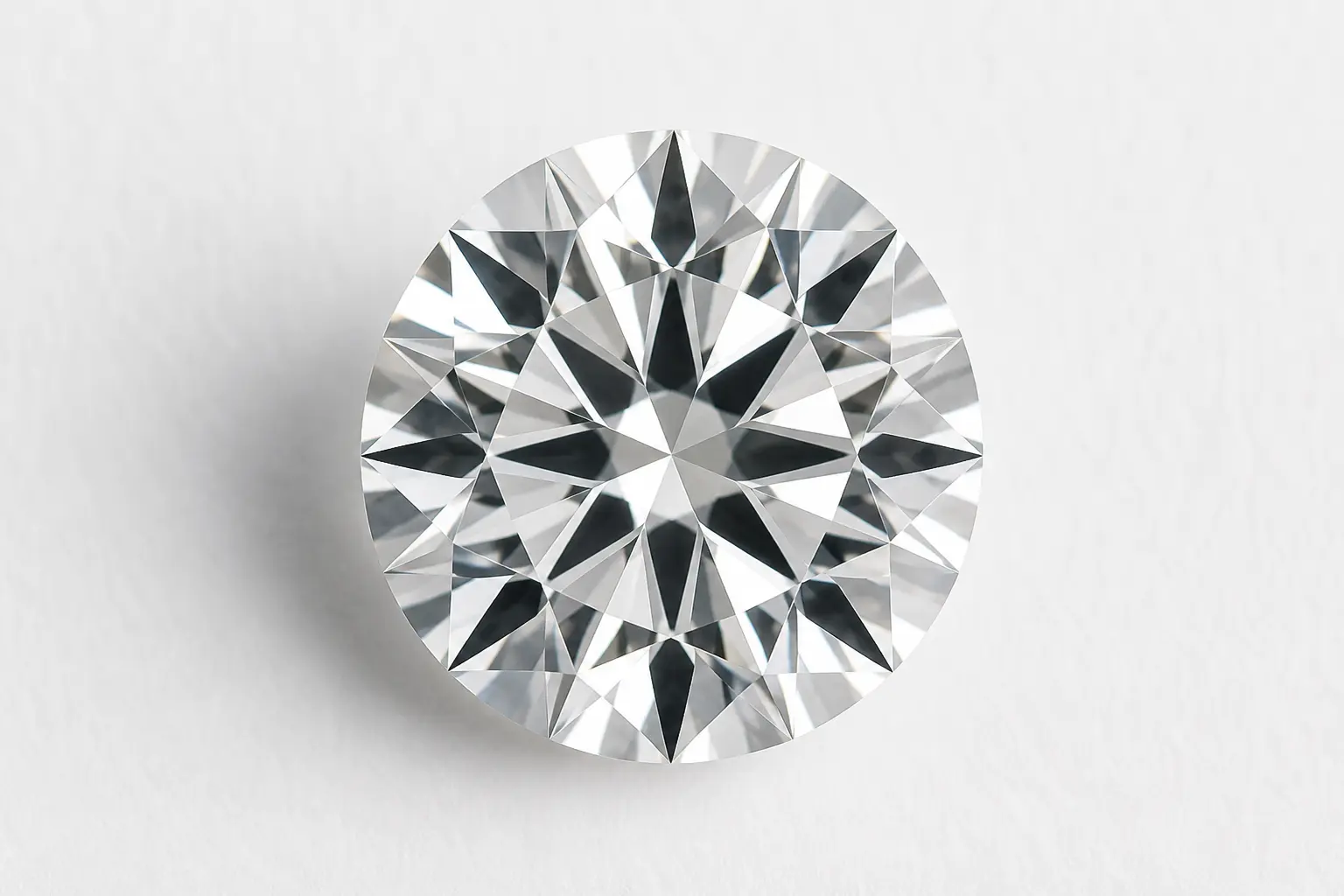
Once upon a time, very good cut was a perfectly defensible compromise grade. The light return was ninety per cent of ideal at perhaps fifteen per cent of the price difference. That math has changed. Ideal-cut diamonds are no longer rare; the manufacturing equipment is no longer specialist. The premium has compressed. The case for ideal cut, in 2026 South Africa, is stronger than it has been in twenty years, and most of the trade has somehow not noticed.
This is an opinion column. The opinion is that ideal cut is now the value buy at the entry-luxury tier, that the trade’s settled habit of pushing very-good is mostly inertia, and that the buyer who insists on ideal is buying a stone that will outperform on every dimension a buyer should care about for less of a premium than the trade implies.
What “ideal cut” actually means
The Gemological Institute of America issues a cut grade on every brilliant-round stone it certifies. The grade runs Excellent, Very Good, Good, Fair, Poor. Ideal cut is trade shorthand for an Excellent grade across all three of cut, polish, and symmetry, the so-called triple-excellent or 3EX stone. The standard was effectively codified by the GIA in 2005, refined since, and is the reason a buyer can today read a single line on a grading report and know what light return to expect.
The dealers who manufacture to this specification do so because cut is the only one of the four Cs the cutter controls. Carat is set by the rough; colour is set by the rough; clarity is set by the rough; cut is set by the wheel. A wholesaler like a Bedfordview cutting house that has cut to the GIA Excellent specification for more than twenty years has built a business on the premise that the cutter’s discipline is the buyer’s edge. That premise is not theory.
The premium has compressed
Five years ago, the spread between a 3EX 1-carat brilliant and the same stone in very-good cut was twenty-five to forty per cent of the price. The premium reflected manufacturing time, equipment cost, and rejection rate at the wheel. Today, with computer-guided cutting now standard and rejection rates down across the trade, that spread sits closer to eight to fifteen per cent. A buyer paying R8 000 to R15 000 more on a R100 000 stone is buying a measurable, certificate-attested grade improvement that survives every future appraisal and resale conversation.
The trade has not closed the price gap to zero, and it should not, there is still a real cost difference. But the gap is small enough now that the case for paying it is straightforward.
Why most of the trade settled for very-good
Volume economics. A retail jeweller turning over hundreds of stones a year prefers the stock that sells to the broadest customer base, and the broadest customer base does not insist on 3EX. The very-good stones look excellent under retail lighting (which is engineered to flatter every grade) and the customer signs the invoice. The retail margin is also healthier on very-good, wholesalers are willing to discount the very-good band more aggressively to move volume, and the retailer keeps the spread.
None of this is bad faith on the trade’s part. It is a stable equilibrium that works for both retailer and average customer. It just is not the equilibrium that is best for the buyer who has read a grading report.
The cut grade describes the proportions, symmetry, and polish that determine a diamond’s interaction with light. It is the only one of the diamond’s gradeable characteristics under the cutter’s control, and the only one a faceting decision can change.
GIA, Diamond Cut Grading System
Why the buyer should care
Three reasons. First, light return is the most visually obvious of all the diamond’s properties, the difference between a 3EX brilliant and a very-good brilliant under ordinary daylight is visible to the naked eye, and the buyer will see it for the rest of the stone’s life. Second, every future appraisal references the grading report, and the grade is the line item that survives. Third, resale, when it eventually happens, returns more on a 3EX stone than on a very-good stone of equivalent carat, colour, and clarity, because the resale buyer is, by definition, paying attention.
None of those returns are speculative. The stone’s grade is fixed at the moment of certification and travels with the stone forever. Pay the small premium once, retain it forever.
The honest concession
An ideal-cut stone is not the right stone for every buyer. A buyer choosing a fancy-shape diamond, emerald, pear, marquise, oval, is choosing a category in which cut grading has historically been less codified, and the 3EX framework is brilliant-round-specific. A buyer prioritising carat over grade, the bigger-but-lesser stone, the half-carat-step-up purchase, has a defensible argument that visible size beats invisible perfection. A buyer choosing for design first, where the setting hides the table or the stone sits in pavé, is right to prioritise the design over the cut grade. A branded proprietary cut from a high-end house is, for instance, engineered to prioritise optical signature over the standard 3EX framework, and on its own terms, it works.
The argument is therefore narrower: among standard brilliant-round stones, in the entry-luxury price band, ideal cut is now the value buy. The grading report is where the case is made; the wholesale corridor is where it is bought; our standards are how we report it.